



For millennia, humanity has been drawn to the breathtaking beauty and intricate formations of crystals and precious stones. These geological wonders, with their crystalline structure and vibrant colors, have captivated artists, rulers, and spiritual seekers alike. Within the context of the Bible, however, their significance transcends mere aesthetic appeal; they function as profound symbols of divine glory, covenant, and ultimate purity.
When we examine the scriptural use of gems, we are not looking at a manual for spiritual objects, but rather at a rich tapestry of symbolism woven by ancient writers. The Bible employs these materials—from the deep blue of sapphire to the brilliant clarity of jasper—to point toward concepts that are ultimately immaterial: the perfect holiness of God, the faithfulness of His covenant, and the glorious, unblemished nature of His eternal kingdom. Understanding this symbolism requires a shift in perspective, moving from the physical object to the divine truth it represents.
Note: This article is for informational and spiritual reflection only. It is not a substitute for professional theological, pastoral, or mental health counseling.
Biblical Symbolism and Themes: Where Crystals Appear
The biblical references to precious stones are profound because they are never used casually. Each instance carries significant theological weight, anchoring the reader to a specific truth about God’s character or humanity’s relationship with Him. The most powerful symbolic usage can be found in the descriptions of God’s ultimate dwelling place and the foundational covenants established with Israel.
Try a free compatibility tool
Check your zodiac compatibility
Compare two signs and see where the connection feels easy, intense, or surprising.
The Glory of the New Jerusalem (Revelation)
Perhaps the most vivid use of gem symbolism is found in the vision of the New Jerusalem, the heavenly city that descends from God. Here, the description of the city’s walls, foundations, and brilliance is adorned with every imaginable precious stone, including jasper, sapphire, and crystal-clear elements. This imagery does not merely describe architecture; it symbolizes the sheer, overwhelming magnitude of God’s glory. The crystalline clarity suggests a perfect transparency—a place where the light of God shines without distortion, representing absolute holiness and ultimate purity. The stone becomes a metaphor for the unveiled, perfect nature of God’s presence.
The Covenant and the High Priest’s Breastplate (Exodus)
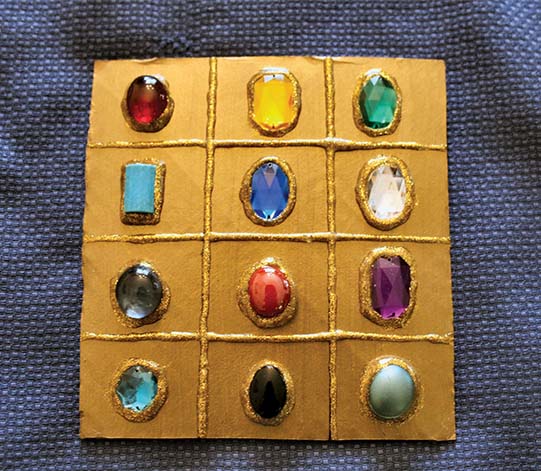
In the Old Testament, the creation of the High Priest’s Breastplate serves as a detailed theological map. Adorned with twelve distinct precious stones, each representing one of the twelve tribes of Israel, the breastplate was a physical, wearable symbol of God’s covenant with the entire nation. The stones, including various forms of crystal and jasper, symbolized the unity and diversity of the chosen people. When the High Priest wore this, he was constantly reminded of the collective identity and the sacred trust placed upon the covenant community. The stones, therefore, symbolize the integrity and interconnectedness of the body of Israel, pointing toward a unified relationship with God.
The Divine Presence and Sanctuary (Ezekiel)
Similarly, visions of God’s glory and the sacred temple often employ gem imagery. These descriptions frequently use stones to convey the sheer weight and brilliance of the divine presence—the *Shekinah*. The brilliance, the crystalline shine, and the richness of the gems are not merely decoration; they are symbolic representations of God’s immeasurable holiness and majesty, which is so brilliant it can only be contained and reflected by the most perfect, transparent materials.
Soul Signal Quiz
What Message Is the Universe Sending You Right Now?
Take the 60-second Soul Signal Quiz and reveal whether this sign points to clarity, love, purpose, protection, or transformation.
Scripture Themes and Caution: Faith vs. Object
It is crucial for the modern reader to understand the fundamental difference between biblical symbolism and the contemporary use of objects for spiritual power. The Bible’s message is consistently centered on the transcendent grace of God and the redemptive work of Christ; it never posits that physical objects possess inherent, independent power to save, heal, or guide.
The overarching biblical theme is the necessity of *faith*—a trust placed entirely in God’s Word and Spirit. When gems are mentioned, they are always contextualized within acts of worship, covenant, or divine revelation. They are signs pointing *away* from themselves and *toward* the glorious, eternal reality of God. To focus on the stone, rather than the divine truth it illuminates, is to misunderstand the very nature of the covenant.
This caution is a gentle but firm reminder: Spiritual power in the Bible is accessed through prayer, obedience, the reading of Scripture, and the guidance of the Holy Spirit, not through the physical manipulation or energy channeling of any material object. The focus must always remain on the immutability and sovereignty of the Almighty.
Positive Meaning: Reflecting God’s Glory
When interpreted through a spiritual lens, the symbolism of crystal and precious stones encourages a profound pursuit of internal clarity. If the New Jerusalem is described as shining with crystalline brilliance, it is a powerful metaphor for the believer’s ultimate destiny: a life purified by God’s truth and characterized by unwavering clarity of purpose.
The positive spiritual reflection derived from this symbolism is the call to cultivate a heart and mind that are transparent, or ‘crystal clear,’ before God. This clarity does not mean intellectual perfection, but rather a purity of intention, a willingness to see truth without distortion, and a readiness to reflect the light of Christ in one’s daily life. The stones remind us that our ultimate calling is to become vessels worthy of God’s brilliant, unchanging glory.
Warning or Cautionary Meaning: The Necessity of Discernment
In modern spiritual culture, the symbolism of crystals has sometimes been adapted into practices such as crystal healing. While the intention behind these practices—seeking healing and balance—is deeply human and commendable, it is vital for the believer to exercise rigorous biblical discernment.
The Bible does not endorse the concept of inherent, stored energy within stones, nor does it teach that these objects can be used to channel supernatural power separate from God’s direct action. To rely on such practices can inadvertently shift the focus of worship and trust away from the one true source of life: the Triune God. We are called to seek healing, guidance, and peace through the established channels of Scripture, prayer, and the community of faith. Any spiritual practice that suggests the object itself holds the power is a deviation from the biblical understanding of God’s sole sovereignty.
Practical Spiritual Reflection: Applying Biblical Clarity Today
The symbolism of the crystal is not meant to be a decorative motif, but a spiritual mirror. How can we apply this concept of “clarity” to our daily lives? First, it calls us to clarity of thought—to study Scripture diligently, allowing the Word to polish our understanding until it shines with divine truth. Second, it calls us to clarity of heart—to confess hidden motives, forgive unaddressed wrongs, and pursue genuine repentance, allowing nothing to cloud our devotion to God.
A practical exercise in reflection is to view your own life as a temple. Just as the gems adorned the High Priest’s breastplate, each aspect of your life—your relationships, your work, your thoughts—should be marked by the truth of the Gospel. Cultivating this ‘crystal clarity’ means developing a disciplined habit of prayer and meditation on Scripture, ensuring that your deepest desires and motivations align perfectly with God’s perfect will.
Historical and Cultural Context: Gemstones Beyond the Bible
For those interested in the anthropological or scientific history of gems, it is important to note that the cultural use of stones predates and exists independently of biblical theology. Gemology is the study of minerals, focusing on their geological formation, chemical composition, and physical characteristics. Historically, gems were used across ancient civilizations—such as Egypt, Mesopotamia, and Greece—as markers of wealth, political status, and cultural identity. The ability to acquire and wear rare, vibrant stones signaled power and connection to global trade routes.
From a psychological perspective, the beauty and permanence of these materials often led ancient people to imbue them with deep symbolic meaning related to memory, emotion, and the enduring nature of human experience. They were thought to hold echoes of the earth’s deep time, linking the wearer to something eternal. While these historical uses are fascinating, the biblical approach elevates this symbolism, anchoring it to the eternal, unchanging nature of God Himself.
Frequently Asked Questions
In biblical symbolism, crystals and precious stones are not viewed as objects of inherent power. Instead, they are profound metaphors used by ancient writers to represent immaterial, divine truths. They primarily symbolize God’s perfect, unblemished glory, absolute holiness, divine clarity, and the enduring nature of His covenant.
What does the gem description in the New Jerusalem symbolize?
The detailed description of the New Jerusalem, adorned with every precious stone, symbolizes the overwhelming and perfect magnitude of God’s glory and presence. The crystalline clarity suggests a perfect transparency—a place where God’s light shines without distortion, representing absolute holiness and ultimate purity.
How do gemstones relate to God’s covenant with Israel?
The creation of the High Priest’s Breastplate, featuring twelve stones, is a key example. These stones symbolized the covenant relationship with the entire nation of Israel, representing the unity and integrity of the chosen people under God’s promise. They point to a unified and sacred trust with God.
Is the biblical use of crystals the same as modern crystal healing?
No. It is crucial to distinguish between biblical symbolism and modern metaphysical practices. The Bible teaches that spiritual power and guidance come solely from the Triune God through faith, Scripture, and prayer. The stones are always signs pointing *away* from themselves and *toward* the divine reality, not sources of independent, inherent power.
Conclusion: A Symbol of Enduring Truth
Ultimately, the dazzling beauty of crystal, jasper, and sapphire in the biblical narrative serves one overarching purpose: to point the human gaze from the material world to the immaterial reality of God. The gems are magnificent, but they are merely echoes of the perfect, brilliant, and flawless glory of the Creator.
The deepest and most enduring truth remains that God’s glory is not contained within a physical object, but is revealed through His Word and made accessible through faith. By understanding the symbolism of the precious stones, we are encouraged to seek not merely outward adornment, but the inward, enduring, and unblemished clarity of heart that reflects the light of Christ.
Your reading does not have to end here
Keep exploring your path
Try a free tool or continue into related meanings while the curiosity is still warm.
