


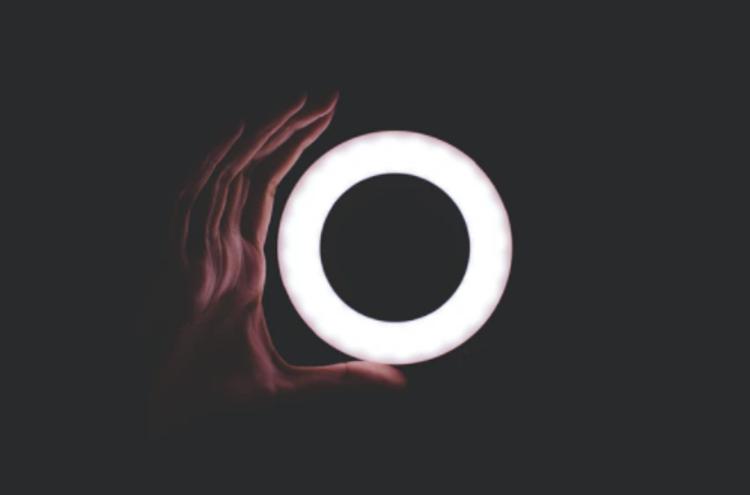
The search for deeper meaning within sacred texts often leads us to symbols—visual shorthand that communicates complex truths beyond mere language. Among these universal signs, the circle stands out as one of the most profound and enduring geometric forms. In a biblical context, the study of the circle is not merely an exercise in geometry; it is a journey into the nature of God Himself.
Understanding the biblical meaning of a circle allows us to reflect on core doctrines concerning divine permanence, perfect love, and infinite sovereignty. It suggests concepts that defy earthly boundaries—the sense of wholeness that has no discernible beginning or end. For those seeking spiritual insight through scripture, recognizing this powerful symbol can invite profound moments of reflection regarding God’s boundless plan for human life.
Note: This article is for informational and spiritual reflection only. It is not a substitute for professional theological, pastoral, or mental health counseling.
Biblical Symbolism and Themes
Eternity and Infinity
The most prominent biblical interpretation of the circle relates to the concept of eternity. Because a perfect circle has no start point and no end point, it naturally symbolizes infinity—a boundless existence that precedes time itself. In theological reflection, this points directly toward God’s nature as being eternal.
Try a free compatibility tool
Check your zodiac compatibility
Compare two signs and see where the connection feels easy, intense, or surprising.
When scripture speaks of God, using language related to “beginning” and “end,” the circular symbolism is often evoked. This suggests a divine reality that exists outside the linear constraints of human time—it simply *is*. This boundless quality represents not only endless power but also unending love. The circle invites us to contemplate a God whose existence is absolute and unchanging, encompassing all moments from the primal dawn to the final culmination.
Wholeness and Completeness
Another powerful theme associated with circular symbolism is wholeness or perfection. A complete circle has no gaps; it is self-contained and perfect in its form. In biblical narratives, this concept of completeness often relates to God’s divine plan—a plan that is entirely comprehensive and flawless. It suggests that nothing in the grand scope of creation happens by random chance.
The idea of wholeness also connects to concepts like covenant. A perfect circle represents a binding agreement or promise (covenant) that is unbreakable, suggesting God’s commitment to His people is absolute and complete. This depth of symbolism reminds us that the divine structure of reality is fundamentally harmonious and unified.
Unity and Oneness
The symbol can also be used to represent unity—the idea that all things are connected back to a single, unifying source (God). The circle has no corners or sharp breaks; it flows continuously. This fluidity mirrors the concept of divine oneness, where seemingly disparate elements (like father, son, and holy spirit, in theological reflection) ultimately belong to one unified reality.
Furthermore, the physical act of forming a continuous ring—such as a wedding band—is perhaps the most common cultural manifestation of this symbolism. It represents an unbreakable union between two individuals, mirroring the idea that true spiritual bonds are eternal and cyclical in their devotion and renewal.
Soul Signal Quiz
What Message Is the Universe Sending You Right Now?
Take the 60-second Soul Signal Quiz and reveal whether this sign points to clarity, love, purpose, protection, or transformation.
Scripture Themes and Caution
The Concept of Divine Sovereignty
When viewing biblical passages through the lens of circular symbolism, one can contemplate God’s absolute sovereignty. The circle suggests an overarching control—a divine pattern that governs all cycles of life, death, harvest, and seasons. This is not merely controlling events, but understanding the fundamental rhythm of existence itself.
This depth encourages us to reflect on trusting in a plan that operates beyond our limited human perspective. It prompts spiritual discernment: recognizing that even during times of apparent chaos or discontinuity in our lives, there may be an underlying, perfect divine order at work, much like the unbroken line of a circle.
A Call for Reflective Humility
While the symbolism is overwhelmingly positive regarding God’s power and love, it also carries a gentle caution. The sheer magnitude of eternal perfection can sometimes inspire feelings of human limitation or inadequacy. Therefore, the circular symbol reminds believers that while God’s plan is perfect and complete, our understanding of it will always be partial.
This leads to an important spiritual practice: humility. We are called to view life’s journey not as a series of disconnected events, but as part of a vast, cyclical narrative under divine care. When faced with confusion or uncertainty, the circular symbol encourages us to pause and seek wisdom, knowing that even the most confusing moments fit into God’s ultimate, unbreakable design.
Positive Meaning
Enduring Grace and Mercy
The positive spiritual interpretation of the circle centers heavily on God’s enduring grace. Because the shape is continuous and unending, it serves as a powerful metaphor for divine mercy—mercy that flows ceaselessly and never runs out. No matter how far we stray or how many times we stumble, the source of divine forgiveness remains constant and perpetually available.
This symbol provides immense comfort: the cycle of repentance and renewal is always open. The circle represents a continuous return to grace, ensuring that no sin or failure can permanently sever our connection to God’s loving presence. It speaks to His steadfast faithfulness across generations and through varying human experiences.
The Promise of Eternal Life
Most upliftingly, the circular symbol connects deeply with the promise of eternal life. If earthly existence is often perceived as linear—a start and an end—the promise of heaven or resurrection suggests a transcendence of that boundary. The circle thus becomes a visual representation of everlasting peace, unending fellowship with God, and a state of being outside the constraints of time.
To reflect on this means embracing hope. It assures the believer that life’s ultimate destination is not merely an endpoint, but a continuous, perfect communion—a perpetual circle of divine joy and restoration.
Warning or Cautionary Meaning
Misunderstanding Divine Timing
A cautionary reflection stemming from the symbolism relates to human impatience. Because the cycle suggests that everything unfolds in its appointed time (God’s timing), a common spiritual pitfall is attempting to force outcomes—to try and rush God’s perfect timetable for our lives or the lives of others. The circle reminds us of patience.
We must resist the urge to view life as purely linear, believing that failure means permanent loss. Instead, we are encouraged to see setbacks not as dead ends, but as necessary curves in a much larger, cyclical journey back toward wholeness and divine purpose. Trusting the process is key to spiritual maturity.
The Danger of Self-Reliance
Another gentle warning relates to self-sufficiency. The perfection of the circle is achieved through its unity; it cannot exist alone or be completed by a single point. Spiritually, this cautions against relying solely on human effort, wisdom, or strength. True completeness and lasting fulfillment are always found in recognizing our dependence on God’s sustaining grace.
The symbol calls us back to the ultimate source of power: the One who is eternal. It serves as a spiritual check, reminding us that while we strive for perfection, only Christ provides the perfect connection and constant lifeline back to divine strength.
Practical Spiritual Reflection
Cultivating Cyclical Faith
For practical application, one can use the concept of the circle to structure daily faith practice. Instead of viewing devotion as a series of isolated tasks (prayer in the morning, reading at night), the circular model encourages seeing faith as a continuous flow—a cycle of grace. This involves acknowledging that repentance is not a single event but a constant return; struggle is not a defeat but a turning point.
This means integrating spiritual discipline into every aspect of life: recognizing moments of gratitude (the peak), admitting failure (the trough), and returning to prayer and reflection (the continuous curve). This view promotes sustainable, resilient faith.
The Reflection on Flow State
Meditation on the circle can also guide us toward a “flow state” in our relationship with God. The flow represents effortless connection—a life lived moment-to-moment in awareness of God’s presence, without being constantly pulled by past guilt or future anxiety. It is about living fully within the present cycle of grace.
To reflect on this practically, one might begin a simple devotional habit: at the start of the day, acknowledge where you are (the point); throughout the day, recognize moments when God’s presence sustains you; and at night, accept that perfect restoration is available to guide you into the next cycle. This continuous awareness anchors the heart in divine reality.
Historical and Cultural Context
Beyond scripture, understanding the circle’s significance requires looking at its broad cultural roots, which often touch upon human psychology and history. Historically, before specific religious interpretations were formalized, circles were used by ancient cultures to represent cosmic order and natural cycles—the movement of the moon, the seasonal changes, or the solar path.
From a psychological perspective, the circle is inherently comforting because it eliminates the concept of an absolute endpoint. In human experience, we often fear endings (loss, death, separation). The symbol counteracts this deep-seated anxiety by suggesting that boundaries are temporary; life’s energy and divine connection are perennial. This universal appeal makes the symbol so potent across different civilizations.
In art and architecture, circles were used because they represent structural integrity—the strength derived from equal tension all around a central point. When viewing this in a broader context, it suggests that God’s power is not exerted through brute force at one point, but through consistent, balanced love distributed everywhere, maintaining the stability of creation.
Frequently Asked Questions
What is the core biblical meaning of the circle symbol?
In biblical symbolism, the circle primarily serves as a powerful visual metaphor for divine attributes that transcend human understanding. The most common themes it represents are eternity (a timeless existence), perfect wholeness or completeness, and unconditional love. It generally points toward God’s unending nature and His continuous commitment to humanity.
How does the circular shape relate to God’s concept of eternity and time?
Because a circle has no identifiable beginning point and no end point, it is understood to symbolize infinity—a boundless existence that precedes human chronology. When readers contemplate this symbol in scripture, they are prompted to reflect on God’s nature as being eternal (existing outside the constraints of linear time), emphasizing His constancy regardless of changing circumstances.
Does the circle represent oneness or completeness in Christian theology?
Yes, it addresses both concepts. As a symbol of wholeness, it suggests that God’s divine plan is entirely comprehensive and flawless—that nothing happens by random chance within the grand scope of creation. Furthermore, its continuous flow represents unity (oneness), suggesting that all aspects of life ultimately connect back to one single, unifying source: God.
Absolutely. The circular concept encourages viewing life’s journey not as a straight line from point A to point B, but as a continuous cycle under divine care. It is meant to inspire patience, reminding us that setbacks or apparent failures are often viewed spiritually as necessary curves leading back toward wholeness and divine purpose, always returning to the source of grace.
Conclusion
The biblical meaning of a circle remains a profoundly rich and multifaceted symbol. It invites deep prayerful reflection on concepts that transcend our immediate grasp: eternity, perfect wholeness, and unconditional love. It is a powerful reminder that the divine nature—God’s being—is fundamentally endless.
Ultimately, the circular symbolism acts as a constant source of hope, assuring us of God’s unchanging fidelity. Whether we view it through the lens of cosmic cycles or eternal covenant, the message remains singular: no matter what point in our lives we find ourselves at, the divine love and plan are continuous, complete, and eternally unfolding.
Your reading does not have to end here
Keep exploring your path
Try a free tool or continue into related meanings while the curiosity is still warm.
