



Throughout history, humanity has sought patterns and meanings in the seemingly random occurrences of life. From the arrangement of stars to the structure of language, the concept of numerology—the belief that numbers hold deep, symbolic significance—has fascinated scholars and spiritual seekers alike. Within the sacred texts, particularly the Bible, numbers rarely appear by chance. They often serve as powerful symbolic markers, guiding the reader toward deeper theological truths about God’s character and humanity’s journey.
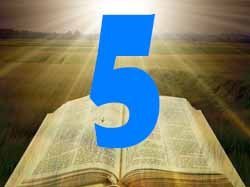
Among these significant numbers, the number five holds a unique and pervasive symbolic weight. It is frequently associated with divine balance, the full scope of human experience, and the abundant nature of God’s favor. To explore the biblical meaning of 5 is not merely to count occurrences, but to embark on a profound journey into the symbolism of divine grace, the interconnectedness of life, and the potential for human wholeness. This article aims to illuminate how the number five reflects God’s enduring goodness and the intricate balance of life.
Note: This article is for informational and spiritual reflection only. It is not a substitute for professional theological, pastoral, or mental health counseling.
Biblical Symbolism and Themes
The Foundation of Law and Teaching: The Pentateuch
One of the most enduring appearances of the number five is found in the foundational texts of Judaism: the Five Books of the Torah, known as the Pentateuch (Genesis, Exodus, Leviticus, Numbers, and Deuteronomy). Symbolically, this grouping represents the entirety of God’s foundational law and covenant with humanity. The fact that the law is structured into five major books suggests that the initial divine instruction was comprehensive and complete, setting the necessary boundaries for human life and relationship with the Creator.
Try a free numerology tool
Find the number behind your birthday
Use your birthdate to reveal your life path number and its meaning.
In a symbolic sense, the Pentateuch represents the ordered unfolding of revelation—the path from creation to law, from wandering to covenant. It underscores the idea that God’s guidance is structured, deliberate, and intended to provide a complete blueprint for a righteous life. This link suggests that the number 5 is inextricably tied to divine order, divine instruction, and the establishment of sacred boundaries.
The Miracle of Abundance: The Five Loaves and Fishes
Perhaps the most famous symbolic occurrence is the miracle of the five loaves of bread and two fishes. When Jesus fed a multitude with such limited resources, the act symbolized more than just physical sustenance; it was a profound declaration of divine provision and abundance. The multiplication of the meager five loaves into enough food for thousands speaks directly to the limitless nature of God’s grace.
The symbolism here is powerful: where human effort, resources, and limitations are numbered five (the small amount), God’s power transforms it into a number far exceeding any calculation. It teaches that the grace of God is not dependent on human resources, but rather flows abundantly, sustaining life and fulfilling needs in ways that defy natural law. This act powerfully links the number 5 to the concept of provision and miraculous favor.
The Ultimate Act of Redemption: The Five Wounds of Christ
In Christian tradition, the number 5 is deeply connected to the five wounds of Christ (the hands, feet, and side). These wounds are universally recognized as symbols of ultimate sacrifice, suffering, and redemption. Symbolically, they represent the complete cost of humanity’s salvation. The five wounds are not merely physical marks; they are theological symbols representing the full scope of the sacrifice required to reconcile humanity with the divine.
This association elevates the number 5 to represent not just provision, but *atonement*. It points to the completion of the divine plan—the perfect, necessary sacrifice that restores harmony between humanity and God, signifying the ultimate victory over sin and death.
The Human Framework: Five Senses and Five Elements
On a more universal level, the number 5 reflects the totality of the human physical experience. The five senses (sight, hearing, smell, taste, and touch) are the primary conduits through which we perceive and interact with the physical world. Similarly, in classical philosophy, the five elements (Earth, Air, Fire, Water, and often Ether or Spirit) represented the fundamental components of existence.
This connection suggests that the number 5 embodies the microcosm—the human being—as a complete system. It links the divine plan (God’s creation) to the physical reality (our senses and environment), implying that divine order permeates the very fabric of existence and our physical lives.
Soul Signal Quiz
What Message Is the Universe Sending You Right Now?
Take the 60-second Soul Signal Quiz and reveal whether this sign points to clarity, love, purpose, protection, or transformation.
Scripture Themes and Caution: Recognizing Human Weakness
While the number 5 is overwhelmingly associated with divine perfection and abundance, its symbolic context also requires acknowledging the human element. The number 5, when viewed through the lens of human experience, can reflect our inherent weakness, our fallibility, and our inability to achieve spiritual wholeness through sheer effort. This duality is crucial for a balanced understanding.
The contrast between the limited, insufficient resources (the five loaves) and the abundant, infinite grace (the miracle) is a constant reminder of this tension. It symbolizes that while humanity is composed of five senses and five physical dimensions, our greatest need is not for more physical resources, but for divine grace—the intervention that transcends our limitations. The number 5 thus represents the *potential* for grace, which serves as the antidote to human weakness and sinfulness.
Positive Meaning: The Pillars of Divine Harmony
The Union of Opposites (The Pentacle)
In various spiritual and mystical traditions, the pentacle (the five-pointed star) is a potent symbol of divine harmony. Geometrically, its five points represent the union of opposing forces: masculine and feminine, body and spirit, mind and emotion. This synthesis of opposites is key to achieving completeness and spiritual balance.
Spiritually, this suggests that true grace is not unilateral. It requires the integration of all parts of the self—the physical body, the emotional heart, the intellectual mind, and the spiritual soul—to achieve a state of wholeness. The number 5, therefore, points toward the ideal state of human existence: a balanced being capable of reflecting the harmony of the divine.
The Completeness of Divine Favor
The positive meaning of 5 is ultimately tied to the concept of *sufficiency*. When God provides five loaves for thousands, the message is that His favor is never minimal. It is always abundant, always sufficient, and always capable of transforming scarcity into overflowing blessing. This points to a divine character defined by unending mercy and grace.
Warning or Cautionary Meaning: The Challenge of Balance
Understanding the symbolism of 5 also requires a gentle caution regarding spiritual pride. The profound balance represented by the five points can sometimes lead to a dangerous over-reliance on symbols, ritual, or mere intellectual understanding, forgetting that the ultimate source of grace is living faith.
The cautionary reflection is this: while the number 5 shows us the beautiful potential for balance (the five elements, the five senses), we must guard against seeking balance purely through human effort or adherence to rigid systems. The greatest danger is mistaking the *symbol* of completeness for the *reality* of grace. Humility is the antidote; it reminds us that the balance we achieve is always sustained by divine intervention and continuous reliance on the Holy Spirit.
Practical Spiritual Reflection: Applying the Symbolism of 5
How can we practically apply the wisdom of the number 5 in our daily lives? The symbolism provides a framework for holistic self-assessment and spiritual growth.
One powerful exercise is the “Five Areas of Balance.” We can reflect on five key areas of our lives—such as our physical health, our emotional well-being, our intellectual pursuits, our spiritual life, and our relationships—and assess where we are currently unbalanced. The goal is not perfection, but recognizing the areas where we need to draw closer to the divine source of grace to restore equilibrium.
Another reflection involves the five senses. When we feel overwhelmed or stressed, grounding ourselves by intentionally engaging all five senses can be a powerful act of returning to the present moment and acknowledging the gifts of creation. This practice helps anchor the spirit in the physical world, reminding us of the tangible goodness that surrounds us, which is a reflection of God’s constant, sustaining presence.
Historical and Cultural Context: 5 Beyond the Bible
For those approaching this topic from a purely historical or academic standpoint, the significance of the number 5 extends far beyond the biblical pages. Its importance is rooted in universal human organization and scientific classification.
Culturally, the concept of the five-day work week is a modern example of how numbers structure human life and labor. In the scientific realm, the five classical elements (Earth, Air, Fire, Water, and Ether) formed the basis of ancient Greek understanding of matter and energy. Similarly, in geometry, the pentagon and pentagram are fundamental shapes studied for their mathematical perfection and inherent balance. These non-religious uses demonstrate that the number 5 is fundamentally associated with structure, completeness, and foundational design—concepts that echo the divine order found in scripture.
Frequently Asked Questions
What does the number 5 symbolize in biblical contexts?
In biblical symbolism, the number 5 is most strongly connected to divine grace, divine provision, and completeness. It often represents the balance and harmony found in creation, pointing toward the fullness of God’s favor and the potential for human wholeness.
What is the significance of the five loaves and fishes?
The miracle of the five loaves and fishes is a powerful symbol of divine abundance. It teaches that God’s grace is limitless. The fact that a small, insufficient amount (the five loaves) was multiplied into enough food for thousands demonstrates that divine power transcends human limitations and resources.
Does the Pentateuch relate to the number five?
Yes. The Pentateuch refers to the first five books of the Torah (Genesis, Exodus, Leviticus, Numbers, and Deuteronomy). Symbolically, this grouping represents the entirety of God’s foundational law and covenant with humanity, suggesting that God’s initial instruction was intended to be comprehensive and complete.
What do the five wounds of Christ symbolize?
In Christian tradition, the five wounds are profound symbols of ultimate sacrifice and atonement. They represent the complete and necessary cost of humanity’s salvation—the perfect sacrifice that restores harmony between humanity and God, signifying the ultimate victory over sin and death.
Conclusion: Embracing the Abundance of Grace
The biblical meaning of the number 5 is a rich tapestry woven with themes of divine grace, abundant provision, and the quest for holistic balance. From the foundational laws of the Torah to the miraculous multiplication of loaves, the number consistently points to one central truth: God’s grace is limitless, always sufficient, and capable of transforming the smallest beginning into an overwhelming blessing.
By understanding the symbolism of 5, we are invited to move beyond simply recognizing symbols and toward embodying the divine qualities they represent—namely, balance, gratitude, and profound reliance on God’s continuous, abundant love. May this understanding encourage a deeper, more balanced, and more grateful life journey.
Your reading does not have to end here
Keep exploring your path
Try a free tool or continue into related meanings while the curiosity is still warm.
